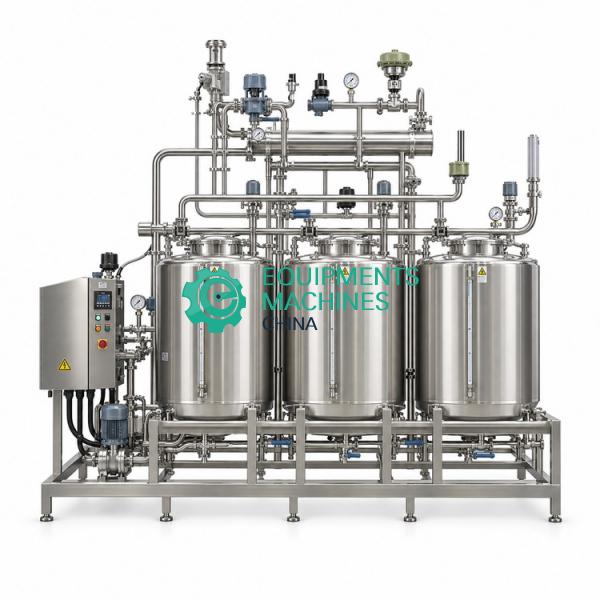
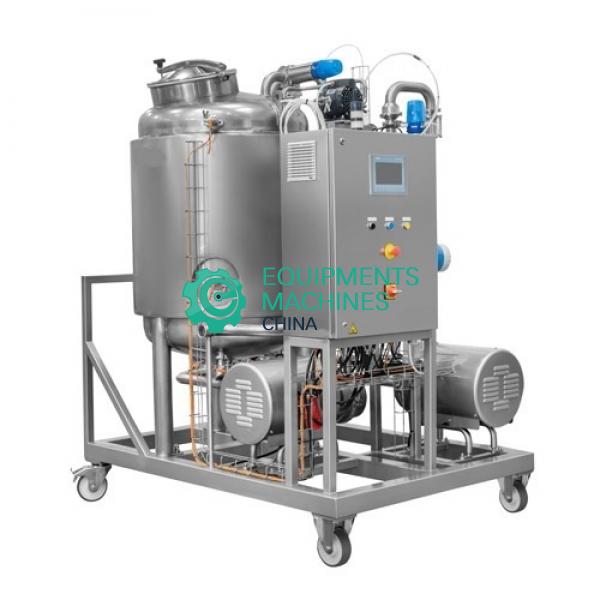
CIP Cleaning System covers clean-in-place equipment: compact integrated skids for small plants and multi-tank stations for larger ones, with the solution tanks, supply and return pumps, heating, dosing and conductivity control, and the programming that sequences a wash. CIP is what makes a dairy, beverage or liquid food plant viable at all, because manual cleaning of closed pipework and vessels is neither practical nor verifiable, and a plant that cannot prove it is clean cannot pass an inspection.
Cleaning validation rests on three variables being controlled and recorded: flow velocity through the circuit, solution temperature and detergent concentration. A system that delivers hot caustic but cannot reach the velocity needed in the largest line is not cleaning that line, which is why circuits are sized and grouped at the design stage. Recovery of final rinse water and of caustic reduces both the water bill and the effluent load, which matters where either is constrained.
CIP systems are a standard element of tendered plant procurement and are also bought separately when a plant upgrades to meet a new hygiene standard. Dairy development boards, co-operative milk unions, water and beverage authorities, food corporations and processing projects financed by development banks all tender them. A compliant offer from us carries circuit calculations, utility and chemical consumption figures, material declarations, origin and warranty terms, priced spares lists and commissioning and validation scope.
Send us your plant circuits and their volumes, and we will size the CIP system and quote it.